Red light Therapy Melbourne
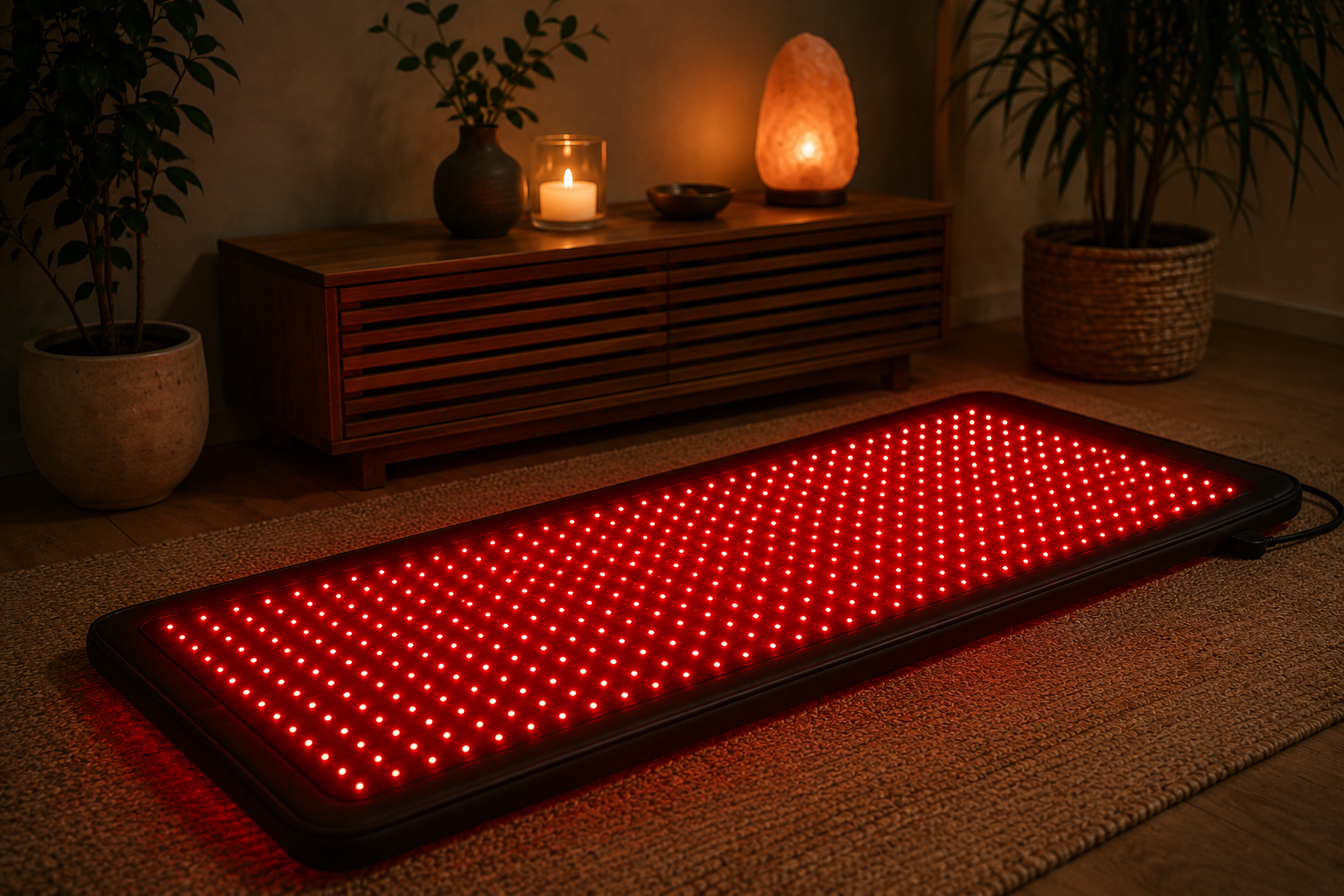
Red Light Therapy & Acupuncture
Where ancient wisdom meets modern technology.
What is red light therapy
Red light therapy is a gentle, non-invasive treatment that uses specific wavelengths of red and near-infrared light to support the body’s natural healing processes. When combined with acupuncture, it can complement treatment by promoting circulation, supporting tissue repair, calming inflammation, encouraging recovery and regulating the nervous system.
Red light therapy may be beneficial for:
Muscle and joint pain
Sports injuries and recovery
Neck and back pain
Poor sleep
General inflammation
Fatigue and wellbeing
Skin health and healthy ageing
Nervous system regulation
Red Light Therapy Through the Lens of Chinese Medicine
Although red light therapy is a modern technology, many of its observed effects closely reflect the principles of Traditional Chinese Medicine.
In Chinese medicine, health depends on the smooth and abundant flow of Qi and Blood throughout the body. Pain, injury and illness often arise when this flow becomes obstructed, deficient or out of balance. Treatment is therefore aimed at restoring harmony and supporting the body’s natural capacity to heal.
Light itself can be understood as an expression of Yang. Yang is associated with warmth, movement, vitality and transformation, the very qualities required for healing and repair. Applied appropriately, red light gently nourishes Yang Qi, encourages the movement of Qi and Blood, and helps create an internal environment where healing can take place.
When combined with acupuncture, the two therapies work in harmony. Acupuncture addresses the underlying patterns of imbalance within the body, while red light therapy provides gentle support at a cellular and tissue level. Together, they offer a truly integrative approach that honours both the wisdom of Traditional Chinese Medicine and the advances of modern science.
What Does the Evidence Say?
Red light therapy, also known as photobiomodulation, has been investigated across a growing range of clinical applications. Research suggests it may have applications in areas including pain management, tissue repair, exercise recovery, wound healing and some inflammatory conditions.
Research suggests photobiomodulation may act through several biological mechanisms, including:
Supporting mitochondrial function and cellular energy (ATP) production
Influencing local circulation and nitric oxide signalling
Modulating inflammatory processes
Supporting collagen production and tissue repair
Supporting recovery following exercise and injury
Modulating oxidative stress and cellular redox signalling
While red light therapy is not intended to replace conventional medical care, it may be used as a non-invasive adjunct to treatment where appropriate.
In the clinic, red light therapy can also be integrated with acupuncture, combining a traditional Chinese medicine approach with contemporary photobiomodulation research.
the science of red light therapy
One of the primary proposed mechanisms of photobiomodulation involves the interaction of red and near-infrared light with cytochrome c oxidase, an enzyme involved in the mitochondrial respiratory chain.
This may influence mitochondrial activity and the production of ATP, the molecule cells use as an immediate source of energy.
Photobiomodulation has also been studied for its potential influence on nitric oxide signalling, blood flow, oxidative stress, inflammatory signalling and cellular repair processes.
Selected Research
Photobiomodulation has been investigated across a range of clinical and physiological applications. The following systematic reviews provide examples of the developing evidence base:
Leal-Junior EC, et al. (2015). Effect of phototherapy (low-level laser therapy and light-emitting diode therapy) on exercise performance and markers of exercise recovery: a systematic review with meta-analysis. Lasers in Medical Science, 30(2), 925–939.
This systematic review and meta-analysis examined photobiomodulation in relation to exercise performance and markers of muscular recovery.
View the research on PubMed
Vanin AA, et al. (2018). Photobiomodulation therapy for the improvement of muscular performance and reduction of muscular fatigue associated with exercise in healthy people: a systematic review and meta-analysis. Lasers in Medical Science, 33(1), 181–214.
The review examined randomised trials investigating PBM for muscular performance and exercise-related fatigue.
View the research on PubMed
Álvarez-Martínez M, Borden G. (2025). A systematic review on whole-body photobiomodulation for exercise performance and recovery. Lasers in Medical Science, 40(1), 55.
View the research on PubMed